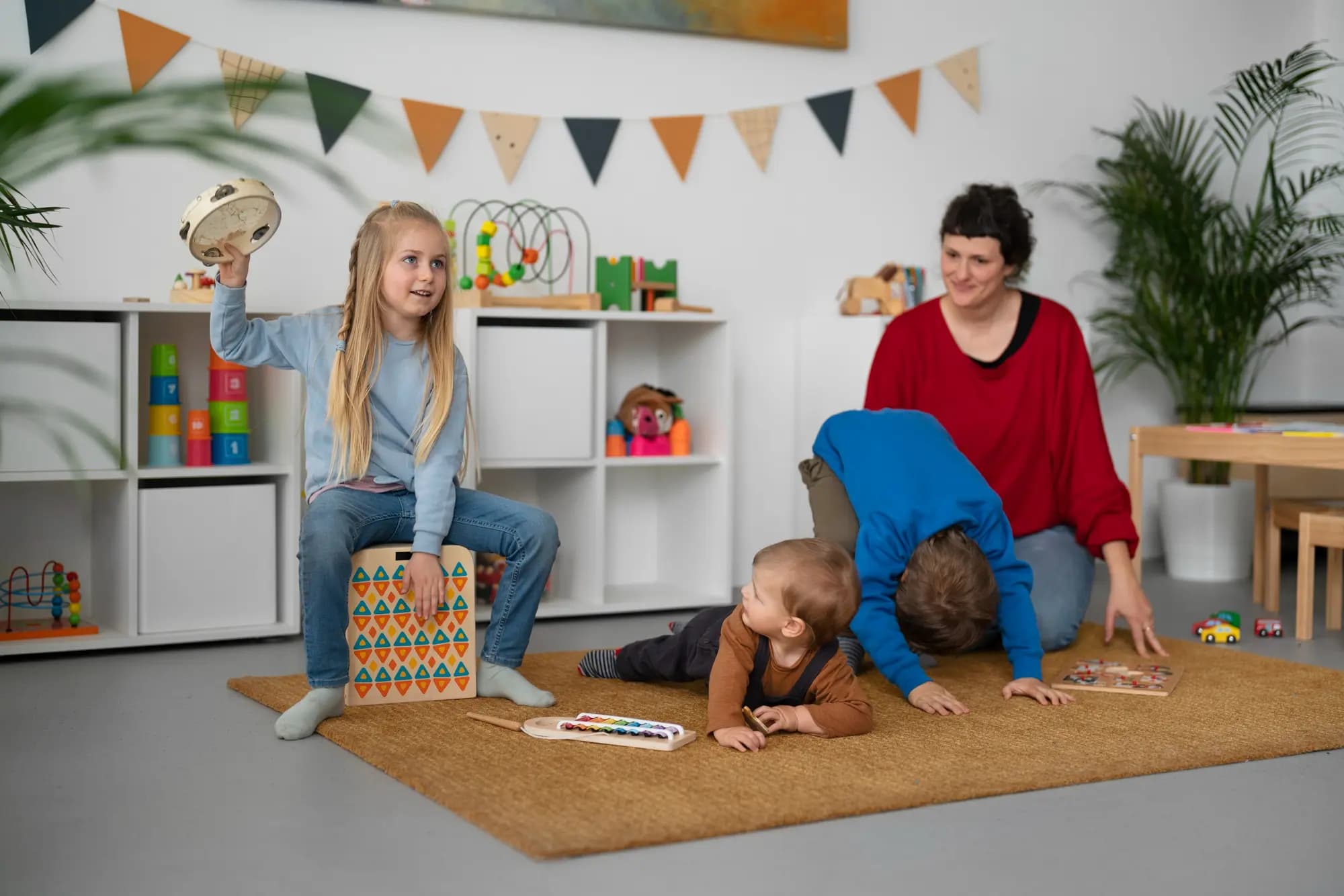
Montessori at home is an alternative educational approach that gives children the freedom to explore a carefully prepared environment. With one low shelf, reachable spots, and fewer toys, parents can build their own classroom.
This approach builds independence, inner drive, and practical life skills, with parents guiding gently instead of directing every step. Discover a guide to building Montessori at home in a simple setup with less clutter.
What Montessori at Home Means
According to the American Montessori Society, Montessori principles can thrive at home. Parents can support a child’s learning by weaving Montessori methods into daily routines.
Parents can bring Montessori education principles into everyday family life, encouraging children to learn through exploration, independence, and hands-on activities. Developed by Dr. Maria Montessori, this approach helps children develop practical skills, creativity, and confidence.
Rather than relying on structured lessons, Montessori at home encourages parents to create a safe, organized, and child-friendly environment. Children can make simple choices and participate in daily routines with play-based learning.
Montessori practical life allows children to engage in fun activities, such as arranging toys, watering plants, preparing snacks, and cleaning up after playtime. These activities develop concentration, coordination, problem-solving skills, and responsibility.
How to Set Up Montessori at Home Step by Step
Setting up Montessori at home does not require a large space, expensive furniture, or special educational materials. The key is to create a safe, organized, and child-friendly environment, encouraging independence, exploration, and hands-on learning.
Start With One Low Shelf
The first step in introducing Montessori at home is to set up a low, open shelf. Choose a shelf at your child’s height and arrange a small selection of age-appropriate activities in baskets.
Start with four to six Montessori toys that encourage hands-on learning, such as stacking blocks, wooden puzzles, sorting games, or matching cards. Rotate the activities based on your child’s interests and developmental stage to maintain curiosity without overwhelming them.
Make Everyday Spaces Reachable
Build a reachable space that helps toddlers do activities or children complete simple tasks independently. Arrange frequently used items such as toys, books, clothes, and personal belongings at their height, allowing them to reach what they need without asking for help.
Simple changes to a child’s room can boost confidence, teach practical skills, and encourage ownership of daily routines. Match each change to your child or toddler’s age and abilities, so every reachable space stays safe.
Keep the Bedroom Simple
A Montessori-inspired bedroom should be simple, organized, and comfortable for the little ones. It gives children a peaceful space to rest, play, and develop independence through child-friendly furniture.
Arrange toys and books on low shelves, provide accessible storage for clothes, and create a cozy reading corner with a soft rug or cushions. A low bed encourages independent movement, while babies should always sleep in a safety-approved crib.
Montessori Activities for Toddlers You Can Do With Things You Already Own
Montessori activities for toddlers do not require expensive educational toys or specialized learning materials. Everyday household items can become simple, hands-on activities that encourage independence, creativity, concentration, and problem-solving skills.
Practical Life Activities
Practical life activities may include pouring water into cups, folding small towels, matching socks, wiping tables, and watering plants. These practical activities are useful while toddlers participate in family routines.
Start by demonstrating each practical life activity, then encourage your toddler to try it independently at their own pace. Use child-sized tools and familiar household items to make tasks easier and more manageable, while providing supervision when needed.
Simple Sensory and Movement Activities
Sensory play is central to Montessori learning, letting toddlers discover the world through touch, sight, sound, and movement. Walking along a line of tape, sorting colorful objects, rolling balls, or exploring different fabric textures can develop sensory awareness, balance, coordination, and concentration.
Parents can create a Montessori-inspired activity room with everyday materials, such as soft towels, cardboard boxes, cushions, and plastic containers. These hands-on activities encourage curiosity, strengthen gross and fine motor skills, and allow children to learn through movement and discovery.
Do You Need Montessori Toys? What to Buy and What to Skip
You do not need costly Montessori materials to build a meaningful learning space at home. Because the method values hands-on exploration, independence, and practical life skills, ordinary household objects work as well as purpose-made educational toys.
When choosing Montessori toys for toddlers, parents should prioritize simple, age-appropriate materials that encourage problem-solving. Wooden puzzles, stacking blocks, shape sorters, and matching games are good options for practicing specific skills through repetition and discovery.
Parents can skip expensive Montessori toy bundles, complicated learning toys, and products that promise to accelerate a child’s development. Toys with excessive lights, sounds, or automated features may offer fewer opportunities for children to actively explore and solve problems.
How Play-Based Learning Fits Into Montessori at Home
At home, parents can combine the Montessori approach for children make simple choices and join daily routines through play . It helps children develop concentration, creativity, coordination, and problem-solving skills.
For instance, toddlers can use wooden blocks to build different structures, experiment with pouring water between containers, or explore nature by collecting and observing leaves. These activities encourage children to discover and practice new skills.
The key to these two approaches is to balance freedom with gentle guidance, helping children choose activities based on their interests. By incorporating play-based learning into Montessori at home, parents can support their children’s independence, confidence, and social-emotional development.
Common Mistakes When Starting Montessori at Home
When building Montessori at home, parents often focus on buying expensive toys and creating a complicated setup. A few things to avoid are worth mentioning when introducing Montessori principles into your children’s daily routine.
- Buying too many Montessori toys: Expensive toys and learning materials aren’t necessary. Start with a few age-appropriate activities and everyday household items that encourage hands-on learning.
- Overloading shelves with activities: Displaying too many toys at once can make it difficult for toddlers to focus. Keep a small selection of activities on low shelves and rotate them based on your child’s interests.
- Expecting children to learn too quickly: Every child develops at their own pace. Avoid rushing activities or expecting toddlers to master new skills immediately.
- Interfering with independent play: Constantly correcting or directing children can limit their opportunities to explore and solve problems. Let them experiment independently, and offer guidance when needed.
- Focusing too much on a perfect setup: Montessori at home is about encouraging independence, not creating a picture-perfect learning space. A simple, safe, and organized environment is enough to get started.
- Forgetting practical life activities: Montessori learning goes beyond educational toys. Everyday tasks such as folding clothes, watering plants, and cleaning up after playtime provide valuable opportunities to develop confidence and responsibility.
- Following rigid schedules: Forcing children to complete specific activities at fixed times may reduce their natural interest in learning. Maintain a flexible routine that allows time for exploration, repetition, and rest.
Avoiding these common mistakes helps create a more relaxed and supportive Montessori home environment. This gives children the confidence to explore, learn, and grow more independent at home.
Start With One Shelf and One Activity This Week
Starting Montessori at home does not require a complete room makeover or a collection of expensive educational toys. Begin with one low shelf and a simple, age-appropriate activity, such as stacking blocks, matching socks, or pouring water.
If your children get bored with Montessori-inspired activities, find an alternative activity to keep them occupied and learning new skills. Mai Main Playground gives children room to build confidence and independence through its attractions, while they strengthen soft skills and enjoy playtime with kids their own age.

