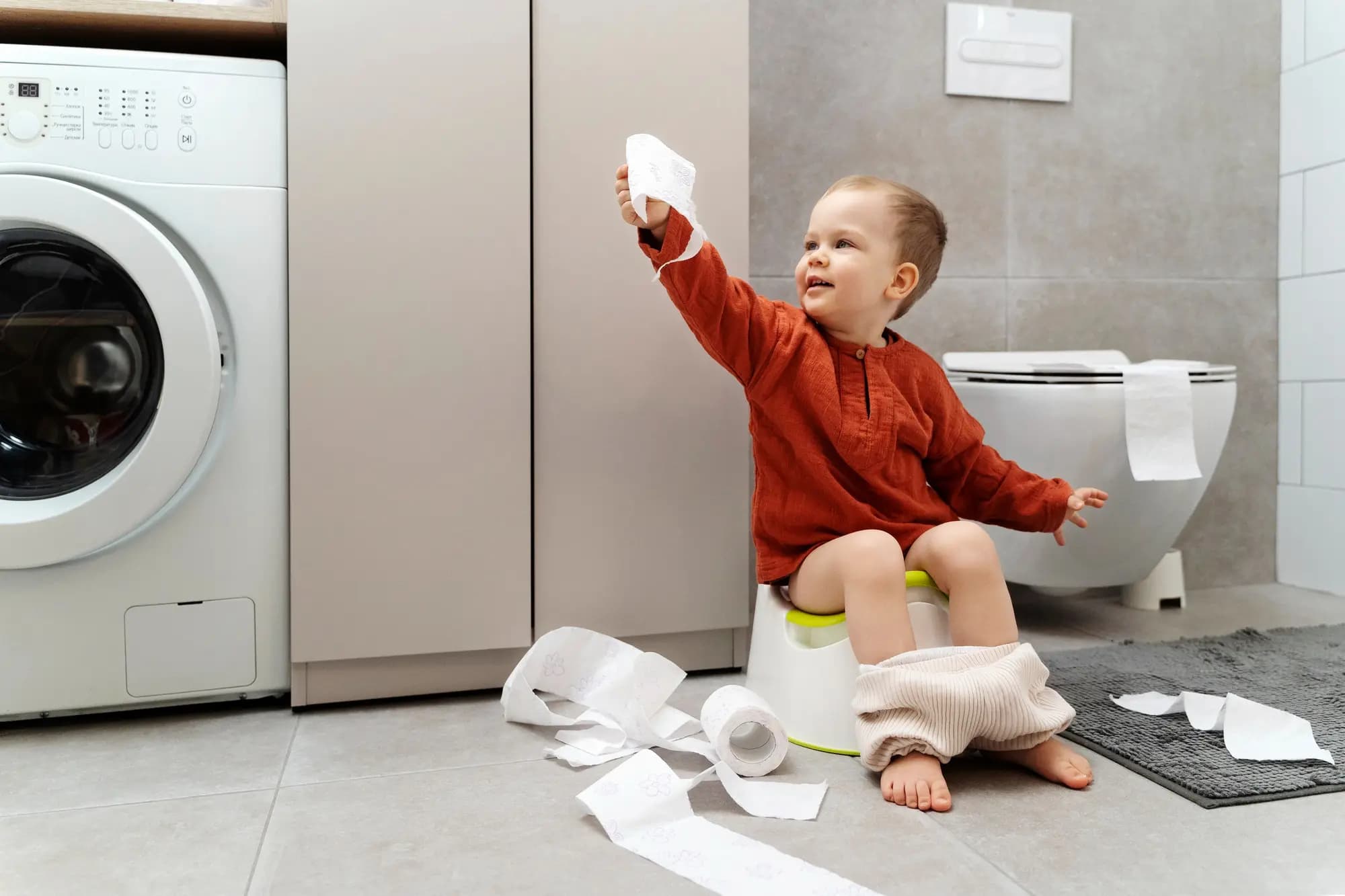
Potty training, also called toilet training, is the process of teaching toddlers or children to use a potty or toilet. The American Academy of Pediatrics states that training can start when a child shows physical, emotional, and developmental readiness, around 18 months or older.
Training helps kids move out of diapers. This guide shows parents how to support little ones as they learn to use the toilet on their own.
Potty Training Age and Readiness Signs
Every kid develops at their own pace, so there is no exact age to begin training. Most children show readiness between 18 and 24 months, as bladder and bowel control develops.
Age is not the only factor in readiness. Several indicators of potty training readiness can help parents understand whether their children are developmentally ready.
- Staying dry for at least two hours.
- Showing interest in using the toilet.
- Feeling uncomfortable when wearing a wet or dirty diaper.
- Being able to follow simple instructions.
- Communicating the need to pee or poop.
- Being able to pull their pants up and down.
- Sitting on and getting off the potty without assistance.
When parents spot these signs, they can choose the right time to start. Let children learn at a comfortable pace rather than rushing. Encourage and allow children to learn at a comfortable pace rather than rushing the process.
How to Start Potty Training Step by Step
Toilet training can be built step by step, once children show signs of readiness. Gradually establishing a bathroom routine, with patience and consistent encouragement, can contribute to successful potty training.
Potty Training Boys and Girls
Potty training for boys and girls is similar, but there are slight differences in toilet habits, hygiene practices, and developmental readiness. Girls usually learn to use the toilet earlier than boys, even though individual development may vary.
Potty Training Boys
- Encourage boys to pee while sitting down during the early stages of potty training.
- Introduce standing to pee once they become comfortable using the toilet.
- Teach them how to aim properly to avoid making a mess.
Potty Training Girls
- Teach girls to sit comfortably with their feet supported.
- Show them how to wipe from front to back to reduce the risk of urinary tract infections (UTIs).
- Assist with wiping until they can do it independently.
Teach every child to flush and wash their hands after each visit. Avoid comparing progress with other children, since each child has their own timeline.
A Simple Daily Routine for Home and Daycare
A consistent potty training routine at home and daycare allows toddlers and children to build toilet habits. Parents and daycare staff should work together to establish similar routines, use familiar toilet-related words, and provide positive reinforcement.
| Time | Potty Training Routine |
| After waking up | Encourage children to use the potty. |
| After breakfast | Invite children to sit on the toilet. |
| During morning playtime | Offer a bathroom break every two hours or as needed. |
| Before and after lunch | Encourage children to use the potty. |
| Before nap time | Visit the toilet before going to sleep. |
| After nap time | Encourage another bathroom visit. |
| During afternoon playtime | Remind children to take bathroom breaks. |
| Before bedtime | Use the potty as part of the bedtime routine. |
Adjust the schedule to your toddlers’ needs and activities. Avoid forcing a child to use the toilet, and encourage them to say when they need to pee or poop
Parents have to prepare extra underwear and spare clothes in case of accidents. Regular communication between parents and caregivers helps monitor children’s progress and ensures a consistent approach to potty training at home and in childcare settings.
Easy Clothing and Gear for Warm Weather
Choosing the right clothing and equipment can make the learning process easier, especially for toddlers traveling with their parents to Bali. Bring lightweight, breathable, and easy-to-remove clothing to help children use the toilet more independently.
- Loose-fitting shorts: Choose shorts with elastic waistbands that are easy to pull up and down.
- Cotton underwear: Opt for soft, breathable materials for everyday comfort.
- Potty training pants: Help children transition from diapers to regular underwear.
- Portable potty: Make bathroom breaks more convenient during outdoor activities or family trips.
- Toilet training seat: Helps children sit comfortably and securely on an adult toilet.
- Non-slip step stool: Allows children to reach the toilet and support their feet while sitting.
- Spare clothes and wet bags: Prepare for unexpected accidents when spending time outside.
Parents should avoid dressing children in overalls or clothing with complicated buttons, belts, and zippers. A simple outfit encourages independence and helps prevent unnecessary accidents.
What to Do When Potty Training Regression Happens
Potty training regression may occur when children who have previously learned to use the toilet start having frequent accidents or refuse to use the potty. It can be a frustrating moment for parents when it happens during early childhood development.
The regression does not happen automatically. It can be triggered by stress, emotional changes, or unfamiliar environments, causing toddlers or children to refuse to use their potty during the training process.
Parents are expected to respond calmly when it happens. Here are several ways parents can help children overcome regression:
- Identify the underlying cause: Observe any recent changes, such as starting daycare, moving to a new home, or welcoming a new sibling.
- Stay calm and patient: Avoid expressing disappointment or punishing children when accidents happen.
- Reintroduce familiar routines: Encourage regular bathroom breaks to rebuild toilet habits.
- Provide emotional support: Reassure children that making mistakes is part of learning.
- Celebrate small achievements: Give praise for their efforts to rebuild confidence and motivation.
- Avoid putting too much pressure: Consider taking a temporary break if children become overwhelmed.
These approaches can help children regain a sense of security and gradually return to their potty training routine. A calm and supportive approach from parents can help children feel emotionally secure and manage potty training regression more effectively.
Potty Training While Traveling
Traveling with toddlers during potty training can be challenging. The unfamiliar environment and changes in daily routines may affect their toilet habits, but proper preparation can keep training consistent during a family vacation.
To build children’s independence, take them to Mai Main Playground. Exploring challenging play attractions and interacting with children their own age can help kids build confidence and become more independent.

