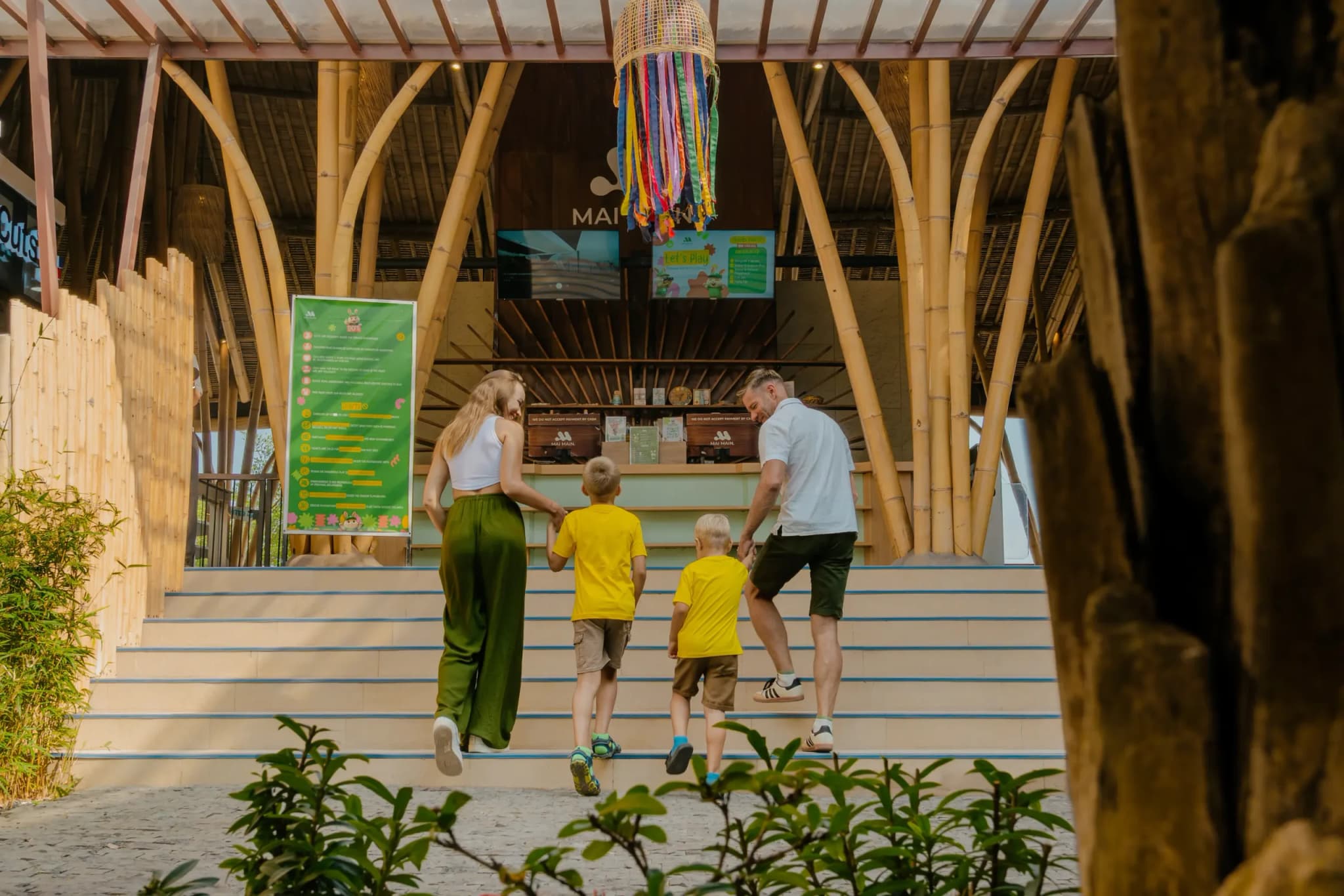
Introducing your child to indoor and outdoor playgrounds is one of the best ways to support them as they grow. Exposing them to different types of play helps them learn, develop, and sharpen several important aspects of their growth.
Indoor and outdoor playgrounds give kids the chance to explore different spaces, move their bodies, interact with others, and try new activities all in one place. In this article, we’ll walk you through why these play spaces matter and where you can find them in Bali.
Indoor and Outdoor Playgrounds Offer Different Experiences
Today, you’ll typically come across two types of playgrounds, indoor and outdoor, and each one offers a different experience by stimulating different aspects of a child’s development. This happens through variations in environment, types of play, and the kind of interaction that takes place.
Research on early childhood play environments points to a key difference between the two: their focus on stimulating motor skills, cognitive development, and environmental comfort. Here’s a closer look at why each space offers such a distinct experience for your child.
| Experience Aspect | Indoor Playground | Outdoor Playground |
| Motor Focus | Sharpens fine motor skills and creativity through props, building blocks, or themed drawings. | Emphasizes gross motor skills through big-muscle activities like running, climbing, jumping, and balancing. |
| Cognitive & Creativity | Encourages problem-solving and creative thinking within a structured setting, such as puzzles or mazes. | Invites free exploration, natural discovery, and direct observation of the world around them. |
| Environmental Factors | Controlled, air-conditioned, more hygienic, and shielded from extreme weather like rain or heat. | Open air, direct sunlight, and closer contact with natural elements like soil, wind, and plants. |
| Safety & Materials | Uses much softer materials such as foam, ball pits, trampolines, and EVA foam flooring. | Uses sturdy, weather-resistant materials and specialized surfaces like rubber flooring or sand to cushion falls. |
| Social Interaction | Usually happens in smaller groups or a more intimate, structured setting. | Encourages kids to share wider spaces and dynamically team up with new friends. |
A playground isn’t just somewhere for kids to spend time while parents relax and keep watch nearby. Whether indoor or outdoor, both offer real, meaningful benefits for a child’s growth.
Indoor Playgrounds for Active and Creative Play

Introducing your child to indoor playgrounds is one of the best ways to support them as they grow, and this space is built safely inside a building, so kids can explore and play freely without worrying about rain or scorching heat. It’s designed as an integrated system that supports physical activity, social exploration, and a child’s motor development.
Even indoors, an indoor playground still delivers a complete play experience, covering physical, interactive, and sensory elements.
Physical Activities in Indoor Playgrounds
Physical activity is often associated with the outdoors, but indoor playgrounds are just as well equipped for it, with wall climbing, rope nets, and foam stairs for climbing; trampolines and soft play areas for jumping; plastic tunnels and hanging bridges for crawling; monkey bars and swings for hanging; and slides or ball pits for sliding and balance.
Each of these features is built to support your child’s physical development, helping build gross motor skills, muscle strength, flexibility, and balance, all in a safe environment.
Interactive and Sensory Play
Beyond physical play, most indoor playgrounds also offer interactive and sensory play, designed to stimulate all five senses, sight, hearing, touch, smell, and taste, along with a child’s sense of balance and body awareness.
You’ll typically find interactive panels that teach cause and effect, ball pools filled with colorful balls that stimulate skin sensitivity and sensory integration, and plenty more beyond that.
These experiences offer real benefits for your child, from brain development through new neural connections built by exploring texture, sound, and color, to fine motor skills like finger strength, body balance, and hand-eye coordination, along with emotional regulation and a healthy outlet for their energy.
Indoor Play for Toddlers
Indoor playgrounds usually set aside a separate, safe zone just for toddlers, complete with small slides, soft blocks, and low platforms sized to their age. This keeps them apart from bigger, more active kids, so they stay safe while still having plenty of room to explore.
Outdoor Playgrounds for Movement and Exploration

Outdoor playgrounds are the opposite of indoor ones, open-air spaces with the sky and sun as their roof. This type of playground is designed to let kids move and explore freely.
Just like indoor playgrounds, outdoor spaces are still built around a variety of features that benefit a child’s growth; the only difference is that it all happens outside, under direct sunlight.
Active Outdoor Play
These spaces typically encourage free-flowing play that gets a child’s whole body moving in an open area, using a range of interactive features that help develop gross motor skills.
The activities themselves tend to be dynamic and varied. Locomotor play lets kids move around the space using their legs and arms, think running, climbing, sliding down slides, and jumping on outdoor trampolines or stepping stones.
Non-locomotor play, on the other hand, challenges kids to hold their body weight, keep their balance, and build coordination through things like climbing a rope structure or a mini rock wall, crossing a wobbly bridge, hanging from bars, and swinging.
Sand and Sensory Exploration
Sensory play has a place in outdoor spaces too, usually built around sand and other natural materials that stimulate a child’s senses. This isn’t just ordinary play; it’s a genuinely important sensory learning method that supports a child’s motor skills, creativity, and cognitive development.
You’ll typically find giant sandboxes, water stations, open-ended sensory toys like buckets and shovels, funnels and sieves, plus natural elements beyond sand, like fine gravel, bark, and leaves. Through these, kids get to explore texture, build and mold shapes, discover cause and effect, and dive into pretend play.
Nature and Animal Activities
At some outdoor playgrounds, kids also get to interact with nature and animals, connecting them with living creatures firsthand. Here, they can engage with animals and other ecosystem elements, like a petting zoo, an animal feeding station, or an animal exploration trail.
For nature exploration zones, kids might find a mud kitchen, a sensory path laid over grass, sand, or stones, a natural climbing structure, and plenty more. Many playgrounds also include a water zone for water play, which offers real benefits for a child’s development.
Combining Indoor and Outdoor Play
Most playgrounds for kids are built as either outdoor or indoor, rarely both together. But what happens when one place brings the two together?
This kind of setup can be a brilliant way to introduce a broad mix of kids activities, each with its own set of benefits. Your child gets to enjoy high-energy active play while also developing cognitive, emotional, and social skills along the way.
Different Ways to Stay Active
Bringing your child to a playground with two distinct spaces, opens up far more variety in how they stay active throughout the day. They get to run, jump, climb, and more, all while mixing in creative play along the way.
This combination brings real benefits too, supporting growth across the physical, intellectual, and mental sides of development all at once.
Structured and Open-Ended Play
Combining both types of playgrounds strikes a nice balance between structured play and open-ended exploration. Indoor spaces usually offer more guided activities like puzzles and cause-and-effect toys, while outdoor spaces let kids decide their own way to play and explore more freely, so they learn to follow rules while also sharpening their own creativity and initiative from an early age.
Adapting to Weather and Play Preferences
When a playground offers both an enclosed space and an open one, parents don’t have to worry about unpredictable weather catching their child off guard or ruining the mood mid-play. If it rains or the heat gets too intense, your child can simply move indoors, and once they’ve had enough of being inside and the weather turns nice, they’re free to run outside instead.
What to Look for in an Indoor Outdoor Playground
If you’re planning to bring your little one to an indoor outdoor playground, there are a few key details worth checking first, so they get the most benefit while still having fun. Here’s what to look for before you go.
Variety of Activities
Make sure the place you’re visiting offers plenty of zones, rides, and a genuinely varied lineup of activities. A wide range of play options introduces your child to a broader mix of skills and experiences, giving them a well-rounded set of benefits from the playground.
Safety and Supervision
Safety should be a top priority when choosing where to go. Check whether the playground follows clear guidelines, like padded flooring, cushioned corners, and staff who actively keep an eye on the play area.
A venue with alert staff and clear protocols lets your child explore more freely, while giving you real peace of mind as you watch over them.
Cleanliness and Comfort
Children have weaker immune systems than adults, and they also tend to get fussier when something feels uncomfortable. That’s why it’s worth checking a playground’s cleanliness before you visit, from the condition of the equipment and flooring to supporting facilities like restrooms and seating for parents.
This matters because it helps protect your child from germs picked up off surfaces during play, while keeping them comfortable throughout the visit.
Age-Appropriate Play Areas
Every child has different abilities and needs, so make sure the playground you visit offers zones suited to their age group. Rides that are too challenging aren’t a good fit for toddlers, and pairing them with older, more active kids isn’t the safest setup either, both for their comfort and wellbeing.
Indoor and Outdoor Activities at Mai Main Playground Bali
Indoor and outdoor playgrounds can offer different but complementary play experiences. Having access to both gives children more opportunities to move, explore, interact, and discover activities they enjoy.
If you’re looking for this kind of playground in Bali, Mai Main Playground Canggu brings both indoor and outdoor play areas together in one spot. With so much variety to explore, it’s an easy place for kids to lose themselves in play for hours. Plan your visit and give your little ones time to enjoy everything at Mai Main.

