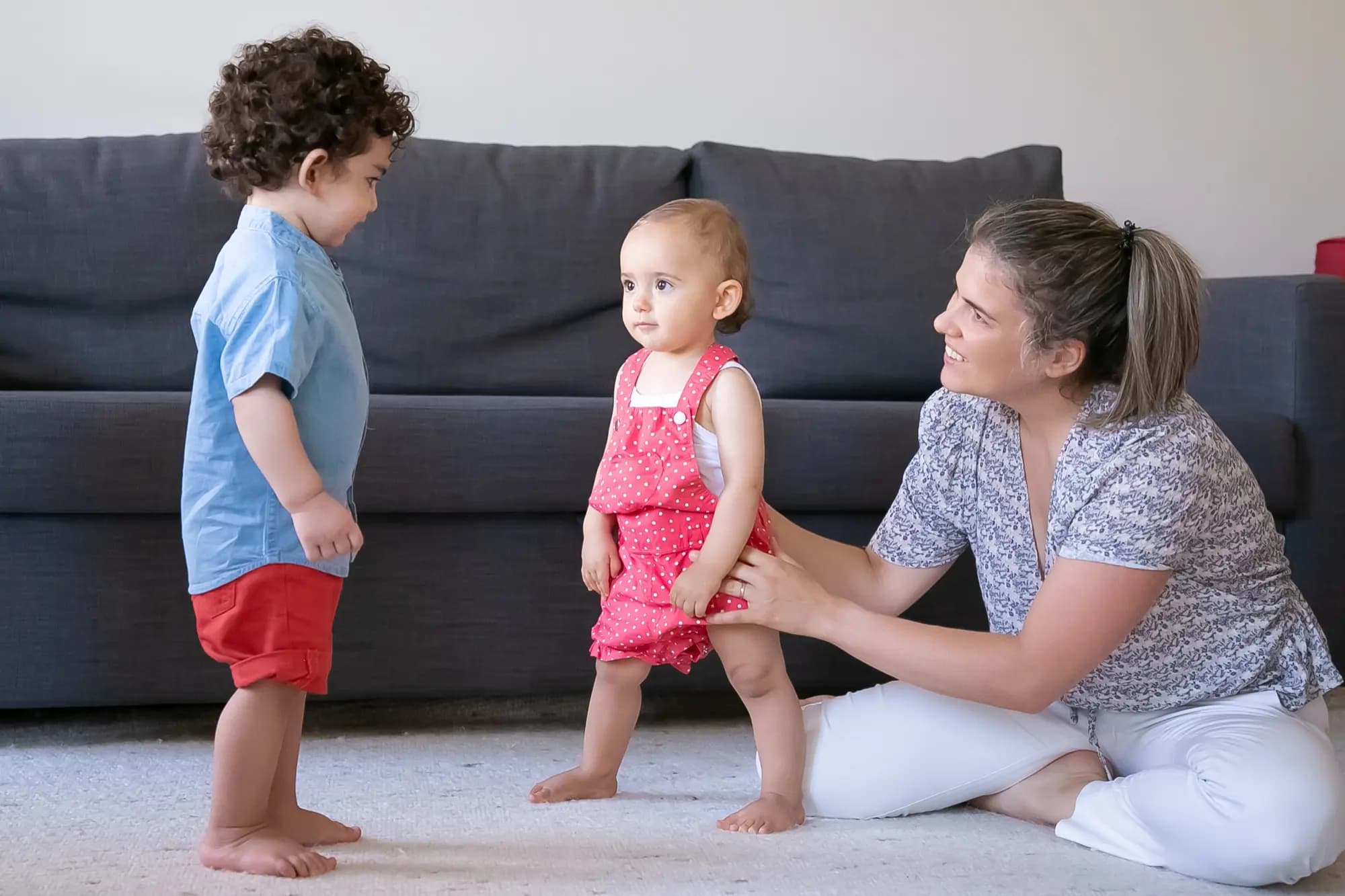
Child development milestones, such as a first step or a first word, are moments parents remember with pride. Yet along with the joy often comes a common worry: “Is my little one growing well?” If you have ever wondered about this, you are not alone, and such feelings are completely normal.
Between the ages of 1 and 3, toddlers change rapidly. They start taking steps, and before long they are running and climbing. They say their first words and, soon after, begin stringing together short phrases. This article walks through the toddler milestones to watch for, so you can feel more at ease and remember that every child grows at their own pace.
Child Development Milestones in the Toddler Years
As humans, we keep growing and learning throughout life, and children are no different. Each new age brings skills children did not have before.
Early childhood development happens in stages. Every new ability builds on what a toddler has already learned, so a small achievement today becomes the foundation for a bigger one later.
According to the Centers for Disease Control and Prevention (CDC), developmental milestones are things most children (75% or more) can do by a certain age. They show up in how children play, learn, speak, act, and move.
Milestones are grouped into four key areas. Movement and physical skills range from big movements like walking and jumping to smaller ones like scribbling. Communication and language grow from first words into short phrases. Learning and problem-solving can be seen in pretend play, following two-step instructions, and finding simple ways to reach something they want. Social and emotional skills include noticing when others are upset, looking to you for cues in new situations, and playing alongside other children.
One thing to remember: every child grows at their own pace. Some children get there sooner, and others need a little more time, which is very common. Reaching a milestone later does not automatically mean something is wrong. Still, if you have concerns, or your child seems to lose a skill they once had, talk with their doctor.
Toddler Milestones to Observe
Every stage brings different abilities. Here are some toddler milestones that parents can watch for, based on the CDC’s 18-month, 24-month, and 30-month checklists.
Movement and Physical Skills
In the early months, babies make small movements with their arms and legs, then gradually gain more control over their bodies. By 18 months, most toddlers walk without holding on to anything, scribble, and climb on and off a sofa or chair without help.
By 24 months, they move in bigger ways, such as running and kicking a ball. By 30 months, many jump off the ground with both feet, turn doorknobs, unscrew lids, take off loose pants or an open jacket, and turn the pages of a book one at a time.
Communication and Language
Communication and language build up gradually too, and during these years language skills can develop quickly.
By 18 months, most toddlers try to say three or more words besides “mama” and “dada.” They also begin to follow simple one-step directions without any gestures, such as handing over a toy when you say, “Give me the toy.”
By 24 months, their communication picks up speed. They start putting two words together, like “more milk,” and point to things in a book when you ask, such as “Where is the bear?” They also add new gestures, such as blowing a kiss or nodding yes.
By 30 months, many toddlers have a vocabulary of about 50 words. They can combine two or more of them with an action word, like “doggie run” or “kitty sleep,” and name things in a book when you point and ask, “What is this?”
Learning and Problem Solving
Toddlers pick up new skills mostly by watching the people around them and trying things out. By 18 months, many copy the chores they see at home, such as sweeping with a broom, and play in simple ways, like pushing a toy car.
By 24 months, their hands and minds work together more. They can hold something in one hand while using the other, like keeping a container steady while taking off the lid. They try out switches, knobs, and buttons on a toy, and they play with more than one toy at the same time, like putting pretend food on a plate.
By 30 months, imagination and problem-solving stand out. Many toddlers pretend, such as feeding a block to a doll as if it were real food. They also find simple solutions, like standing on a small stool to reach something, follow two-step instructions such as “Put the toy down and close the door,” and know at least one color. Hands-on activities like sensory play for toddlers give them more chances to explore and try new things.
Social and Emotional Skills
Social and emotional skills grow with age too, as toddlers begin to connect with the people around them.
By 18 months, they may wander a short distance but glance back to make sure you are close. Toddlers also share attention and cooperate in small ways: pointing out something interesting, holding out their hands to be washed, looking at a few pages of a book with you, and helping with dressing by pushing an arm through a sleeve or lifting a foot.
By 24 months, they notice when others are hurt or upset, such as pausing or looking sad when someone is crying. They also watch your face to learn how to react in a new situation.
By 30 months, many toddlers play next to other children and sometimes join them in play. They show you what they can do by saying, “Look at me!” and follow simple routines when asked, like helping to pick up toys when you say, “It’s clean-up time.”
How Play Supports Early Childhood Growth
Play is more than a way to fill a child’s free time. The American Academy of Pediatrics describes it as brain building, and notes that play with parents and peers helps develop social-emotional, thinking, language, and self-regulation skills.
Here is how play supports different areas of growth:
- Thinking and problem solving: You can offer easy activities like pressing buttons on a toy, stacking blocks, and pretend play to help your toddler explore ideas and work out simple problems.
- Movement and physical skills: You can encourage active play like running, jumping, or climbing to build strength and balance, while scribbling and handling small objects strengthen little hands.
- Language and communication: You can talk, sing, and make-believe together to add new words and short phrases to your little one’s vocabulary.
- Social and emotional skills: You can let your toddler play beside other children with an adult nearby, which helps them notice how others feel and practice taking turns.
Supporting Development Through Everyday Activities
Parental support is an important part of early childhood development. Helping your child thrive takes good nutrition, healthy habits, warm parenting, and plenty of chances to learn through play. Try these everyday activities with your toddler:
- Language and learning: Talk and read together every day, starting in infancy. The AAP encourages shared reading from birth because it helps build language, thinking, and social-emotional skills. You can also offer toys like blocks, puzzles, or pretend-play sets to practice problem-solving, or head to a park or outdoor playground where your toddler can move freely and explore.
- Nutrition and sleep: Offer a varied diet every day, including meat, fish, or eggs, along with fruits and vegetables. Iron-rich foods matter especially, since iron deficiency in early childhood can affect brain development. Aim for enough sleep as well: 11 to 14 hours per day for ages 1 to 2, and 10 to 13 hours for ages 3 to 5, naps included.
- Closeness and emotional development: Respond with warmth and consistency so your toddler feels safe. Help your toddler name big feelings, for example, “Are you feeling sad?” Then stay close until they calm down. Toddlers still need a grown-up’s help to settle themselves, and tantrums are a normal part of this age. Around age 2, toddlers usually play beside other children rather than with them, and they still need help taking turns.
- Routine and screen time: Keep mealtimes and bedtimes regular so the day feels predictable. For screens, the World Health Organization (WHO) recommends no sedentary screen time for children under 2 and no more than 1 hour a day for ages 2 to 4, ideally with an adult alongside. Video calls with family are the usual exception for the youngest. Fill the rest of that time with outdoor play, reading, and talking together, or try more toddler activities at home.
Supporting Your Toddler’s Milestones
Child development milestones are skills that children gain age by age, but not every child reaches them at the same time. Some take a little longer, while others move faster. A later milestone does not automatically mean something is wrong, but keep an eye on your little one’s progress and talk with your child’s doctor if something feels off.
You can support your child’s development through everyday activities, including play-based learning at Mai Main Playground Bali, a large playground in Bali. There, your toddler can try many rides and activities, a fun way to play, explore, and learn new things at their own pace.

