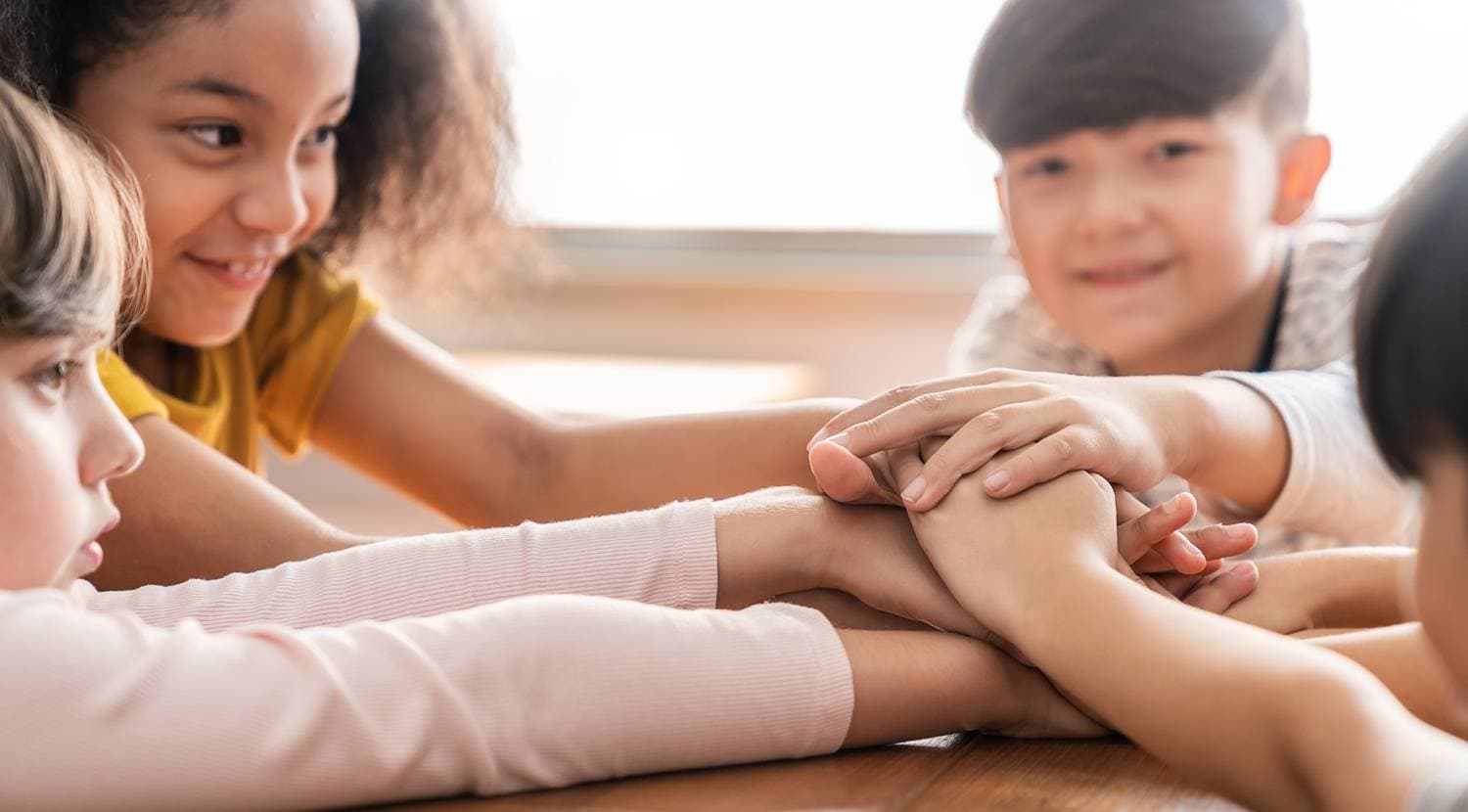
Social skills for kids play a major role in their development and how they’ll navigate the world later on. Yet these skills aren’t something kids are born with; research in developmental psychology and neuroscience shows they develop through repeated everyday experience and interaction.
This means parents play a critical role in nurturing these abilities, helping children build genuine relationships, adapt to new environments, and set themselves up for long-term wellbeing. Below, we’ll walk through practical ways to stimulate social skill development in kids.
1. Sharing and Turn-Taking
Sharing and turn-taking are among the most basic social skills for kids. Both are core socio-emotional and parasocial skills, essential for building healthy two-way interaction, whether in daily conversation, teamwork, formal discussions, or the development of language and social abilities.
Sharing, in this context, refers to communication, encouraging kids to give and receive information, feelings, ideas, and experiences in a way that creates a balanced relationship. Turn-taking, meanwhile, is the ability to recognize when to speak and when to listen to someone else.
So how to improve social skills for kids like sharing and turn-taking? Simple, engaging methods work best, like games with a clear turn-based structure, where the rules make it obvious who goes first and who goes next.
Simple board games such as Snakes and Ladders, Uno, or Jenga work well here too, since the rules naturally require kids to wait their turn without much extra explanation. Beyond building social skills, these simple activities also double as a great way to strengthen the bond between parent and child.
2. Active Listening

Another essential social skill for kids is active listening. This foundational ability is important for children because it helps build empathy, develop effective communication skills, and create strong social relationships.
When kids listen attentively, they learn to understand other people’s perspectives and feel valued. This sense of being heard directly builds their self-esteem and confidence, since children who feel valued and understood are more likely to open up, express themselves, and engage confidently in future conversations.
To instill active listening skills in kids, parents need to lead by example, kneeling to the child’s eye level, maintaining eye contact, and giving full attention without any screens during conversations. You can also practice this with a read-aloud session, reading a storybook together and asking them to recap what happened afterward.
3. Empathy
Many people assume empathy is something children are simply born with, but it’s actually a skill that needs to be nurtured and practiced. While kids do have an innate capacity for sensitivity, they still need guidance from adults to recognize, understand, and respond to other people’s feelings.
For example, babies instinctively cry when they hear another baby crying, a response that suggests humans are wired from birth to connect with others’ emotions. As kids get older, though, empathy grows more complex, requiring them to understand another person’s perspective with genuine compassion, something that doesn’t develop on its own and needs to be modeled and practiced.
So how to teach these social skills to a child? Plenty of empathy-building activities can help, like role-playing with dolls or toys and stepping into someone else’s shoes, asking questions like “how would you feel if your toy got taken away?”
Another social skill activity for kids is reading storybooks together regularly, whether fairy tales or everyday stories, and talking through how the characters might be feeling.
4. Emotional Regulation (Self-Control)

Emotional regulation and self-control are key to a child’s development, helping them manage their feelings and behavior before reacting to a situation. Without these skills, kids can struggle to cope with stress, interact with others, or even stay focused on everyday tasks.
Social-emotional learning for kids can start simply at home with parents or family, through games like Simon Says or Red Light Green Light. These social skill games help build inhibitory control, and the more kids practice, the more naturally they learn to hold back impulses in real situations, like pausing instead of reacting in anger.
For kids who struggle more with emotional regulation and self-control, especially if things are hard to manage at home, a social skills group for kids led by a therapist or counselor can be a helpful option. These groups typically offer more structured support than what parents can practice alone, through peer-based games, calming techniques, and similar activities.
5. Cooperation and Teamwork
The next important social skill for a child’s development is cooperation and teamwork. Both help boost peer interaction by encouraging kids to communicate, understand others, and build healthy relationships, whether at school, at home, or later in life.
To build these skills, parents can introduce cooperative play, like role-playing as medical experts who need to work together to stop a disease outbreak. For school-aged kids, teachers often already run activities that support social skills in school, such as water relay games or moving a ball together using a piece of cloth.
If you have some free time, taking your child to Mai Main Playground Canggu is another great option. It offers several social skills classes for kids, such as dance and cooking classes, designed to help kids practice listening to group instructions and moving in sync with their peers.
6. Starting and Holding a Conversation

Starting and holding a conversation is a basic skill that matters at any age, and kids are no exception. Social skill activities for toddlers help build this ability early on, supporting their social development, listening skills, and confidence in new environments.
This is often part of what’s taught under kindergarten social skills for kids, usually through simple, repeatable games like passing-the-conversation activities or practicing question-and-answer exchanges.
If your child tends to be shy, this skill can take a bit more encouragement to build, and you may find yourself wondering how to help a shy child make friends. Structured playdates and taking turns telling stories at school are two practical starting points, giving shy kids a low-pressure setting to practice speaking and listening without the pressure of a big group.
7. Reading Facial Expressions and Body Language
Though it might seem minor, reading facial expressions and body language is actually a crucial skill for a child’s development and future life. These non-verbal skills form the foundation of emotional intelligence and social development.
A study published in the journal Nature Communications by Xie Wanze (Peking University) and Prof. Seth Pollak (University of Wisconsin) found that five-year-olds can already automatically recognize basic expressions like anger, happiness, fear, and sadness. Understanding the emotions behind these expressions, however, takes longer to develop through experience and learning, rather than through visual instinct alone.
Giving social skills lessons for kids that train both of these areas doesn’t need to be complicated. You can start with simple games like guess-the-expression and emotion mirror, where kids take turns acting out or copying facial expressions and connecting them to specific feelings.
For body language, point out cues during everyday moments, like asking, “How do you think your friend feels when they cross their arms like that?”, or act out different postures during pretend play and have your child guess the emotion.
8. Resolving Conflict Calmly
If you’re wondering which social skill is the trickiest to teach, conflict resolution for kids is definitely one of them, since it means guiding kids to manage frustration and disagreement without immediately reacting with anger or tears.
Left unaddressed, poor conflict resolution can spill into other areas too, affecting friendships at school, classroom behavior, and even a child’s ability to focus on tasks. To build this skill, parents can start small at home. When a child makes a mistake, instead of jumping straight to “say sorry,” walk them through three simple steps: calm down first, listen to the other person’s side, then find a solution together.
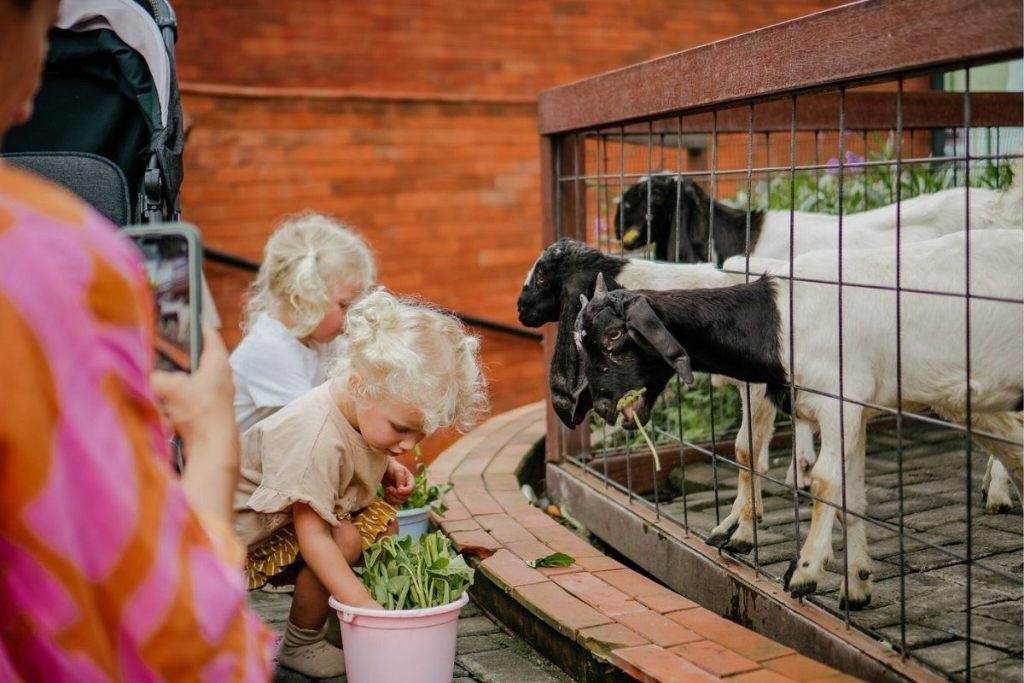
To practice this further, taking kids to a playground like Mai Main Playground Canggu offers plenty of educational benefits too. The venue’s farm animal feeding session is a great real-world exercise for this skill; kids learn to feed the animals one at a time and handle them gently, helping build patience and consideration for other living things in a relaxed setting.
Conclusion

Teaching social skills for kids isn’t easy; it takes consistency, time, and patience to build each skill covered above through everyday moments, whether at home or at school. If you’re looking for more structured support, a good social skills for kids book can round out the practice you’re already doing at home.
Beyond books, playgrounds can help with social skill development too, giving kids a chance to pick up these skills through fun, hands-on activities. Mai Main Playground Canggu is a great option for parents looking to give their kids that kind of practice in a structured setting, with social skills classes for kids like animal farm feeding, cooking together, and more.

