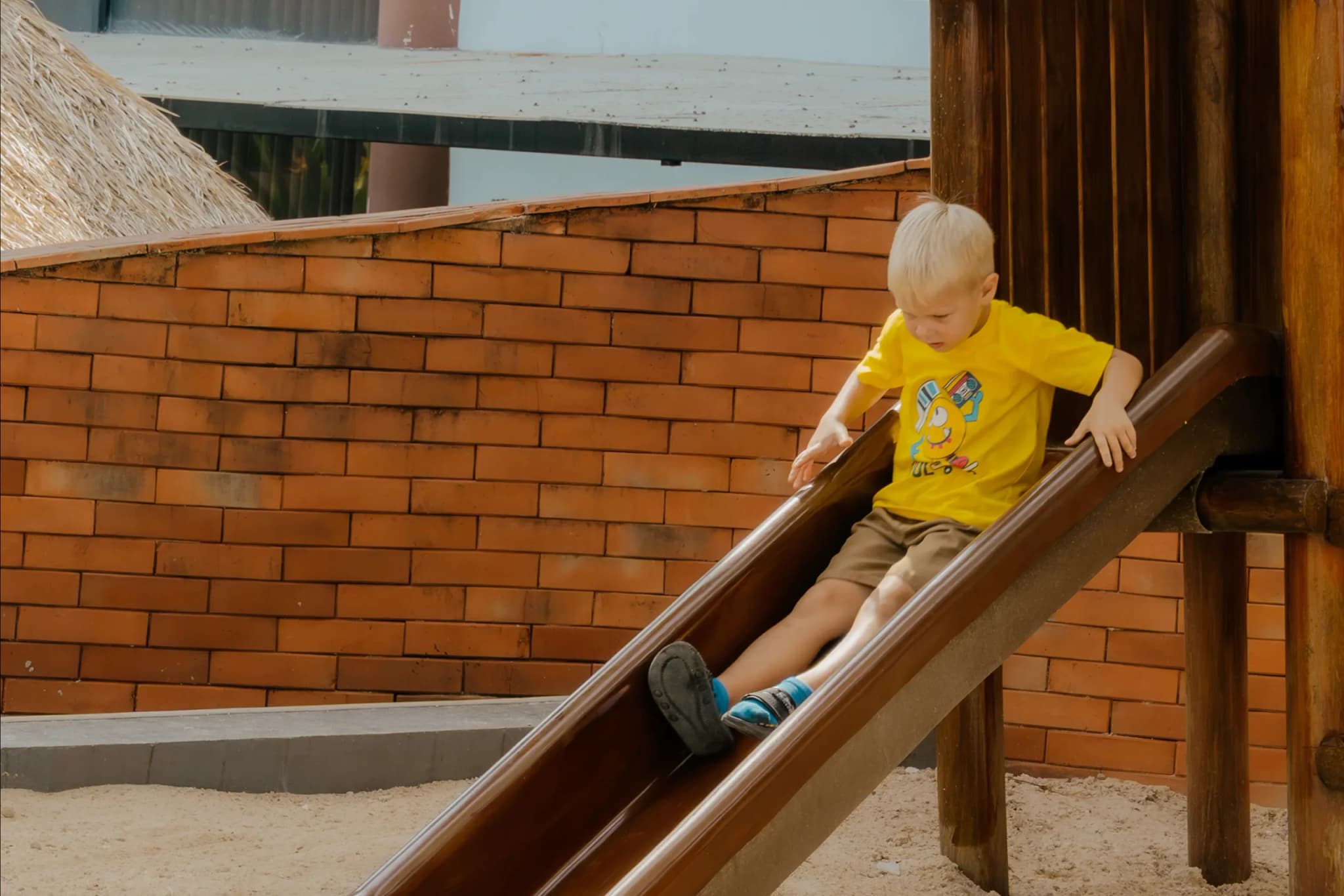
Introducing your little one to a range of playground activities doesn’t just bring them joy; it also supports their growth and development in real ways. These spaces offer plenty of valuable experiences, spanning everything from physical and sensory stimulation to creativity and social interaction.
Bringing your child to the playground is a great way to let them explore, connect, and have fun all at once. If you’re curious about which activities are genuinely worth seeking out, this article walks you through the main types.
Active Playground Activities
Active play covers physical games and movement-based activities that build motor skills and muscle strength. Here are a few examples of these activities.
Climbing, Balancing, and Sliding
Climbing, balancing, and sliding are some of the clearest examples of active play your child can enjoy at the playground. These activities come packed with benefits that support their physical, mental, and social growth.
Whether they’re scaling a climbing net, working their way across a balance beam, or zooming down a slide, each movement builds coordination and muscle strength differently. It’s genuinely fun for kids, but it also helps them understand their own physical limits and build confidence along the way.
Obstacle Courses and Physical Challenges
Another standout among playground activities for kids is the obstacle course, a set of facilities or a play route designed to test a child’s physical ability, agility, and strategy. It pushes them to move their whole body actively as they work toward the finish line.
Common features here include monkey bars and rope climbs, which rely on arm strength to swing across; plastic tunnels or nets where kids crawl and creep low to the ground; and stepping stones, separate raised platforms that challenge your child to jump accurately from one point to the next.
Running and Active Games
Running is something kids can do anywhere, but a playground gives that energy a bit more direction. Running and active games involve full-body movement, including jumping, climbing, and chasing.
These activities make use of features like slides, hanging bridges, or obstacle elements, along with any open space nearby. According to research from Child Trends, well-equipped outdoor play environments are associated with stronger motor skills. Play areas that allow running, jumping, and climbing also tend to promote more vigorous activity, which has been linked to faster motor skill development.
Creative and Sensory Playground Activities
Kids’ playground activities aren’t limited to physical play alone; creative and sensory activities are just as much a part of what kids can enjoy at this space. Both types of play are designed to stimulate a child’s senses while encouraging their creativity, imagination, and freedom of expression.
Here are a few activities that support this.
Imaginative and Interactive Play
Imaginative and interactive play is a form of creative play that matters greatly to a child’s development, and it comes naturally to kids.
As the name suggests, imaginative play is when kids tap into their fantasy, pretending to be something or someone else, while interactive play happens when they communicate, share, and play alongside other kids.
One example of imaginative play is role play or pretend play, like playing house or imagining a castle under siege by a dragon. According to the Child Mind Institute, pretend play gives children a fun way to express their creativity and build social and emotional skills.
Interactive play, meanwhile, shows up in moments like taking turns on the swings, playing tag, or working together with other kids to build something or play a shared game.
Sand and Water Play
Sand and water play supports a child’s sensory development. Beyond that, it can also help build gross motor skills, early science and math concepts such as cause and effect and measurement, and social and communication skills when kids play together.
Common sand and water activities include a sandbox, which builds fine motor skills through digging and molding; buckets and shovels, which spark creativity while shaping different forms; and a water table, which adds a sensory experience through pouring and moving water around.
Exploring Different Textures and Spaces
At the playground, kids also explore a variety of textures and spaces. Both are fun and double as a natural laboratory supporting their physical, cognitive, and emotional growth.
A well-designed playground is typically built with deliberately varied materials to stimulate the sense of touch, from rough, high-grip textures like climbing ropes and rock walls, to smooth surfaces on plastic or metal slides, soft and flexible textures in ball pits, soft play areas, or trampolines, and natural textures found in sand, grass, or water.
Space exploration, meanwhile, comes from how a playground’s layout is divided into different zones that shape how kids interact with their surroundings, such as wide open areas for running and exploring, or smaller, enclosed spaces like tunnels and playhouses.
Social Playground Activities for Kids
Social play is another type of activity kids can pick up, and it naturally helps children interact, work together, and build social skills. Here are a few social activities worth trying out.
Playing With Friends
Visiting a playground gives your child a chance to meet and connect with kids their own age. The interaction that happens naturally between children here often becomes a first, direct lesson in social skills, from negotiating to cooperating and practicing empathy.
Cooperative Games
Cooperative play is another one of the playground activities and games that help sharpen your child’s social skills. This type of activity asks kids to work together as a team toward a shared goal, without focusing on who wins or loses.
A good example is a blindfolded ball toss, where kids work together to guide a blindfolded friend toward hitting a target, ideally on flat ground and under close supervision. Games like this are valuable for building communication, empathy, leadership, and problem-solving skills.
Taking Turns and Sharing
Taking turns and sharing is an activity that builds important social-emotional skills kids need when interacting with their peers. As the name suggests, taking turns means encouraging your child to give other kids a chance to use the same ride or toy, such as the swings or slide.
Through this, kids learn how to play together, wait their turn, and understand that games come with a set duration and rules. Sharing, meanwhile, teaches them to enjoy a toy or object together, like passing sand around in the sandbox, sharing a shovel and bucket, or building a sandcastle side by side.
It helps them build a sense of care, cooperation, and the shared joy of playing together.
Different Activities for Different Ages
There are plenty of activities and play equipment at the playground for your child to enjoy, but every age group has its own set of abilities, so the same activities won’t suit them all. Here’s a breakdown for children up to 12 years old, and remember to supervise young children closely and check that equipment suits their age.
Activities for Toddlers
For toddlers under 3 years old, it’s best to stick with low, simple equipment that helps them build confidence safely, without much risk, such as:
- Slides with a gentle slope: low, short slides help toddlers get comfortable with the sensation of sliding safely.
- Swings with full bucket seats: a secure, enclosed seat keeps toddlers stable and supported while they swing.
- Spring rockers: simple rocking toys build balance and coordination at a gentle pace.
- Single-file step ladders and ramps: an easy way to practice climbing and walking on uneven surfaces with support close by.
- Sensory panels or interactive touch walls: low-to-the-ground and interactive, helping toddlers learn about their surroundings through touch and sound.
Activities for Younger Kids
Kids around 3 to 6 years old can start taking on activities that help build stronger motor skills and hand-eye coordination, including:
- Climbers and low horizontal ladders: build upper body strength and coordination as kids start climbing with more confidence.
- Merry-go-rounds: introduce the fun of group-based play.
- Belt or rotating tire swings: a step up from bucket seats, giving kids more freedom of movement.
- Spiral slides: add excitement and a mild physical challenge compared to straight slides.
- Sandbox and water play stations: perfect for imaginative and sensory play at this highly exploratory age.
Activities for Older Kids
Once your child reaches around 7 to 12 years old, they’re ready for bigger structures that come with a real physical challenge, such as:
- Arch climbers and flexible climbing structures: test strength, coordination, and problem-solving as kids figure out their own route up.
- Overhead rings: build upper body and grip strength through swinging movements.
- Fulcrum seesaws: require coordination and cooperation with a play partner to balance properly.
- Chain or cable walks: challenge balance and focus across a more advanced obstacle.
- Multi-turn spiral slides and track rides: offer a faster, more thrilling experience suited to older kids’ growing confidence.
Why Variety Matters When Choosing a Playground
A playground with a good mix of zones and activities is worth looking for before you bring your child along. That variety matters because it gives kids a more well-rounded set of benefits and suits children of different ages and abilities.
A playground isn’t just a space for fun; it can also be an important place for learning outside the home. With activities that span physical, creative, and social play, kids can build many skills, from gross and fine motor to sensory, cognitive, and creative growth.
Visiting a well-equipped playground that draws other kids also encourages social interaction and communication through a variety of play, whether that’s cooperative games or independent play. Every child has different physical abilities too, so for their comfort and safety, it’s worth choosing a place that accommodates a wide range of ages across its rides and activities.
A Playground With More Ways to Play
Beyond bringing plenty of joy, introducing your child to a wide range of playground activities also supports their growth in meaningful ways, both physically and beyond. It keeps them engaged too, so they are less likely to get bored.
If you’re searching for a place with a full lineup of rides and activities, Mai Main Playground Canggu is one of the biggest playgrounds in Bali and a good place to start. Mai Main bring together indoor and outdoor rides alongside educational activities, giving your child ways to play, learn, and have fun in one place. Plan your visit here.

