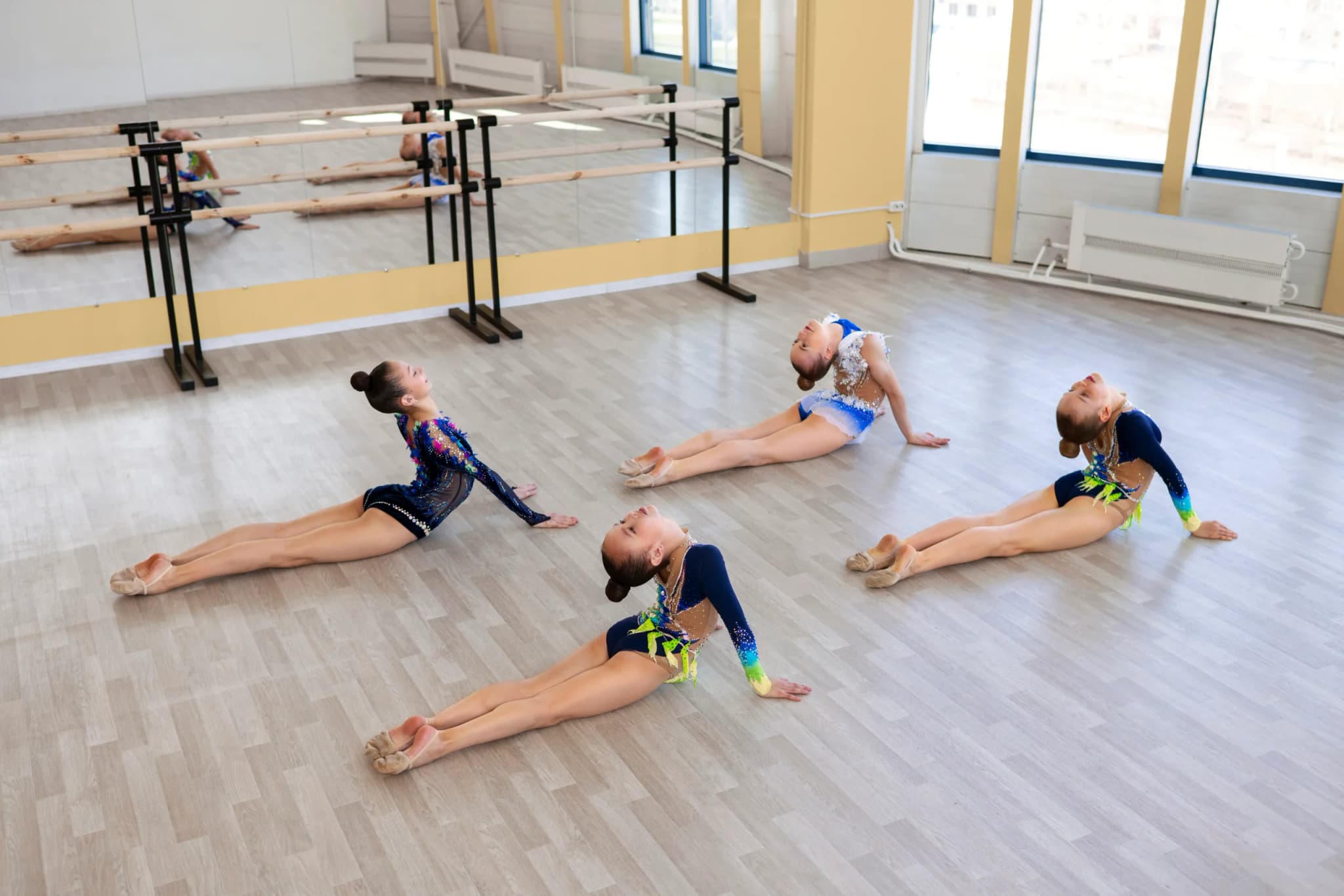
Choosing dance or gymnastics for your children’s after-school activities might be difficult for parents. There’s no single right answer, since every child has different interests, physical traits, and developmental pace, even compared with other kids the same age.
If it is on your radar, you’re in the right place for a complete guide to dance or gymnastics. It will help you choose one of the activities that might be suitable for your kids, making them comfortable doing it.
What is Dance
You should understand that dance is a form of movement in which people use their bodies to express ideas, emotions, stories, traditions, or simply enjoy music and rhythm. Kids can perform it alone, with a partner, or even in a large group.
Kids who love dance may use movement to communicate feelings, such as happiness, sadness, excitement, confidence, love, or anger. It also tells stories without speaking, as facial expressions, gestures, posture, timing, and the way dancers interact are enough.
The genres of dance are varied, and you can introduce them to your kids when they are young, including:
- Traditional Dance
It is usually connected with the culture and history of a particular community, such as Balinese dance, Japanese traditional dance, or Irish dance.
- Ballet
This type of dance is extremely structured, with precise skills, controlled movements, elegant stances, jumps, and turns.
- Contemporary Dance
Through this genre, kids will learn a combination of several dance traditions and generally have greater freedom to explore movement.
These three dance genres are particularly fun for children. It helps them explore many movements to act gracefully on stage, leaving the audience mesmerized as the kids follow music and rhythm with detailed facial expressions.
The Benefits of Dance
As kids follow the rhythm coming from music, they will benefit from dance. Each advantage plays a crucial role in kids’ growth because every movement they learn develops motor skills and the cognitive part of the brain.
1. Improves Physical Feature
Dance keeps the body moving and provides moderate to vigorous physical activity depending on the style. Faster dances such as hip-hop can increase heart rate, while ballet and contemporary frequently involve controlled movement that challenges strength and endurance.
2. Develops Balance and Coordination
Kids constantly need to coordinate different parts of the body at the same time during dance. It helps them develop balance, hand-eye and body coordination, movement control, agility, and spatial awareness.
3. Supports Flexibility and Mobility
Many dance styles include stretching, reaching, bending, turning, and movements that use a wide range of motion. Regular and properly guided practice can help maintain or improve flexibility and mobility.
4. Builds Muscle Strength
While looking graceful, many movements require considerable muscular control. Jumping, holding positions, balancing on one leg, squatting, and repeatedly moving across the floor can strengthen muscles in areas such as legs, core, hips, back, and arms.
5. Encourages Better Body Awareness
Through dance, kids will learn to pay attention to how their bodies move. They will learn about posture, positioning, balance, direction, and how much force is needed for different movements, raising body awareness.
These benefits help children develop good body control, strong muscles, and better flexibility. Then, when is the perfect time for children to learn dance? Here is the explanation.
Best Age to Start Dance
Before choosing a dance class, you have to know the best age for kids to start dancing. Kids benefit from dance in different ways depending on their age, so being aware of this will help you meet their requirements.
- Ages 2-3
It is a perfect age for movement and music exploration through simple activities such as moving to music, clapping to a beat, and jumping and spinning. They enjoy music, can imitate simple movements, and are comfortable participating in a short group activity.
- Ages 3-5
At this age, children are ready for beginner dance classes that introduce basic skills through games and imagination. It is a stage to learn basic dance positions, simple step sequences, and rhythm, as they follow one- or two-step instructions.
- Ages 5-7
Children may explore dance styles such as ballet, jazz, hip-hop, or contemporary dance. They will remember short movement sequences, listen to corrections, coordinate several movements, and participate independently.
- Ages 8-10
At this stage, kids will understand more detailed instructions and practice movements repeatedly to improve them. Training may involve longer choreography, stronger technique, and flexibility exercises.
- Ages 11 and Up
They may work on advanced choreography, strength and conditioning, performance skills, and personal expression.
That is about dance for your children. For better comprehension, you might switch to a gymnastics explanation for your kids’ after-school activities.
What is Gymnastics
Gymnastics is a sport and physical activity that involves movement and requires strength, flexibility, balance, coordination, agility, and body control. It includes skills such as rolling, jumping, swinging, turning, handstands, and more advanced acrobatic movements.
Kids can do several types of gymnastics, as each type of this activity has different movements, including:
- Artistic Gymnastics
A girl doing gymnastics might perform floor exercises, vaults, uneven bars, and balance beams. Meanwhile, a boy commonly performs floor exercises, pommel horse, still rings, vault, parallel bars, and horizontal bar.
- Rhythmic Gymnastics
It combines dance-like movement, flexibility, and apparatus such as ribbons, hoops, balls, clubs, and ropes.
- Acrobatic Gymnastics
This type of gymnastics involves partners or groups performing balances, throws, lifts, and coordinated routines.
Then, is gymnastics harder than dance? The answer depends heavily on kids’ capabilities. Some kids may think dance is easier than gymnastics, or vice versa, so you, as parents, have to know what gymnastics is for, including the benefits.
The Benefits of Gymnastics
Several benefits of gymnastics may impact your kids. This is because the activity involves many parts of the body, making the muscles and strength stronger than in kids who barely use their bodies in daily activities.
1. Builds Strength
Numerous muscle groups are used simultaneously in this exercise. Kids may push, pull, hang, jump, climb, and support their own body weight during practice, as it strengthens arms and shoulders, core, back, legs, and overall body.
2. Improves Balance
Children may practice standing on one leg, walking on beams, landing after jumps, and holding different body positions. Over time, these help improve stability and body control, which helps kids balance their bodies.
3. Develops Coordination
Several gymnastics movements require the arms, legs, eyes, and core to work together. It helps them improve overall motor coordination and control their hand placement, leg movement, direction, and balance in daily activities.
4. Supports Flexibility
This activity includes stretching and movements that use different ranges of motion. Flexibility improves gradually as the kids practice gymnastics movements for areas such as the hips, shoulders, legs, and back.
5. Improves Body Awareness
Kids will learn about body awareness as gymnastics allows bodies to move through space. They will learn what it feels like to jump, rotate, balance, roll, hang, land, and move upside down.
After a deeper comprehension of gymnastics, you may wonder what the best age is to start gymnastics. If you are planning to make your children do this activity, you should first understand the best age to start.
Best Age to Start Gymnastics
Each age has a different stage of learning gymnastics movements. You must understand it because it influences children’s development of body awareness and their exploration of simple to complicated motions.
- Ages 1-2
At this age, kids will focus more on movement exploration and play, not formal technique, including crawling through tunnels, walking over soft obstacles, or rolling on mats. They are comfortable moving around, enjoy climbing, and can participate in simple guided activities.
- Ages 3-5
Around this age, children are ready for gymnastics classes with more structure, as they start learning forward rolls, basic balancing, and jumping and landing. They can follow simple movements independently.
- Ages 5-7
Children get better balance, coordination, attention, and body control, which help them learn basic techniques such as cartwheels, handstands, bridges, beam sequences, and bar skills.
- Ages 7-10
Training sessions become more focused on strength, flexibility, technique, and balance. Children can even begin to explore competitive programs around this age.
- Ages 10 and Up
Your kids can develop significant improvements in strength, flexibility, coordination, and body control.
After understanding gymnastics, you can compare it to dance. The comparison helps you choose the activity that lets your kids express themselves best through movement.
Dance vs Gymnastics: How to Know Which One Fits Your Child?
Paying attention to kids’ personalities is important. It helps you identify their interests, whether they love moving along the rhythm or enjoy jumping and rolling, as all these lead kids to a specific best activity.
Dance may be a better choice if your child naturally moves when music starts, likes performing or pretending, and enjoys rhythm and musical games. So, if your child enjoy music, storytelling, and costumes, dance is a suitable activity for them.
Meanwhile, gymnastics is perfect for children who frequently climb furniture at home or playground equipment. This activity emphasizes strength, balance, flexibility, agility, body control, and acrobatic skills.
Conclusion
Dance and gymnastics are two different activities that can contribute to kids’ growth. From strength and better coordination to great flexibility, all these activities help children express themselves and keep their bodies from being stressed.
To build social skills through a dance class introduction, you can take your children to Mai Main Playground. Spend time getting to know children’s interests and learning about things that catch their curiosity.

