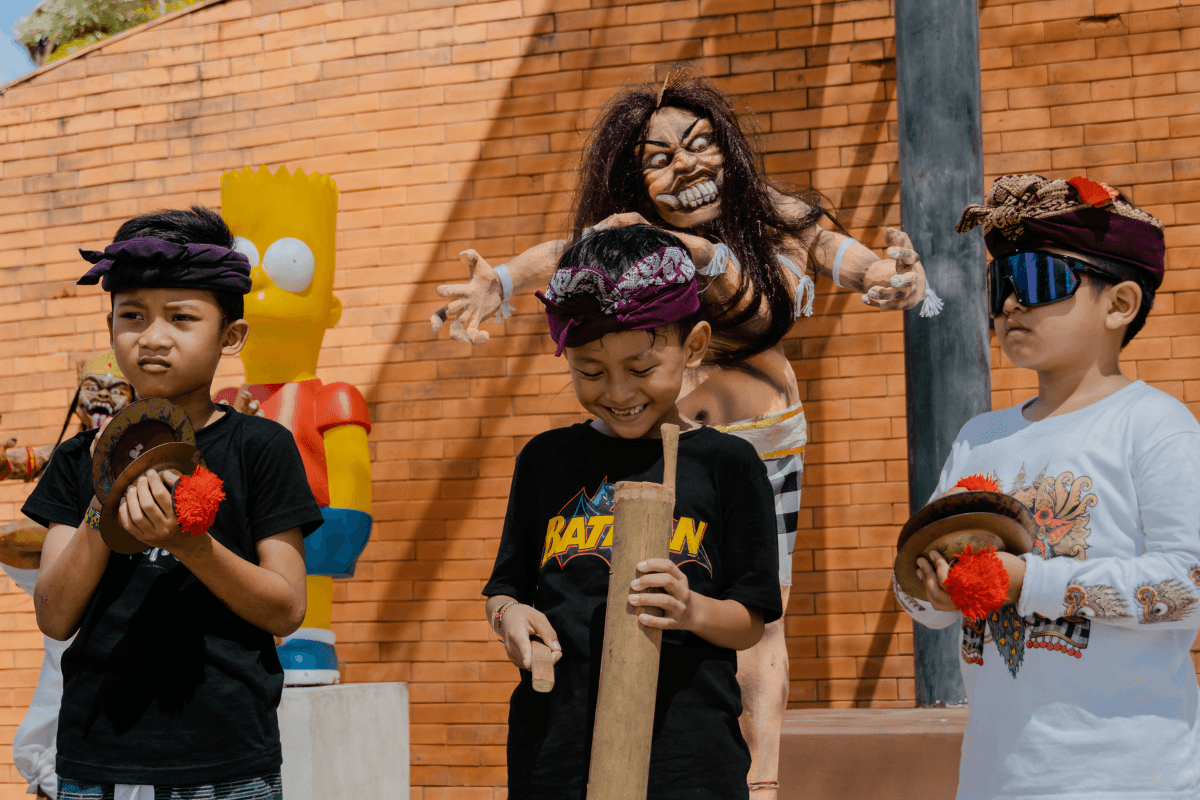
Bali is known for its rich cultural heritage and captivating traditions, making it an ideal place for children to explore local traditions up close. Introducing kids to Balinese culture is one of the must-try family experiences when visiting the island, as it brings learning to life in a fun and meaningful way.
Learning about culture is not only about education, but also about creating joyful experiences that spark curiosity, creativity, and emotional connection with the surrounding environment. In this article, we will share several recommendations for cultural activities for kids in Bali that are worth trying during your family trip.
6 Cultural Activities for Kids in Bali
1. Balinese Dance Class

Talking about Balinese culture, traditional dance is one of the island’s most iconic cultural expressions. Deeply rooted in Hindu traditions and rich artistic heritage, Bali preserves a wide variety of dances that have been passed down through generations.
Balinese dance is diverse and generally classified into three categories: sacred (Wali), semi-sacred (Bebali), and entertainment (Balih-balihan). Some of the most well-known performances include Kecak, Barong, Pendet, Legong, Baris, and Trunajaya, all distinguished by expressive eye movements (seledet), intricate hand gestures, and the powerful rhythm of gamelan music.
Introducing children to Balinese dance can be a fun and meaningful experience during their visit to the island. Beyond being enjoyable, it helps develop motor skills such as coordination, flexibility, and balance, while also supporting cognitive growth like memory and focus, as well as emotional and social skills, including confidence, discipline, and teamwork.
It can also spark creativity and help children unwind, making their holiday more memorable. In Bali, many places are offering Balinese dance classes for kids, from local community studios to cultural centers, as well as immersive stays like resorts and villas by iNi ViE that include cultural activities such as Balinese dance lessons.
2. Traditional Offering Flower Arrangement (Canang Sari)

Learning how to make traditional offering flower arrangements (canang sari) is also one of the fun things to do in Bali with kids. In Balinese Hindu tradition, canang sari is a daily offering made from a woven palm-leaf tray filled with flowers and other symbolic elements.
This offering is presented with prayers as a form of gratitude and devotion to Ida Sang Hyang Widhi Wasa (God). It represents sincerity, peace, and harmony, and is usually placed in home shrines, temples, or even along streets as part of daily spiritual practice.
Teaching children how to make canang sari is a great Balinese culture activities for children because it goes beyond a simple craft activity. It introduces them to important cultural values such as gratitude, patience, attention to detail, and responsibility as they arrange each element carefully and neatly.
This activity also helps develop children’s fine motor skills, focus, and creativity. More importantly, it allows them to connect more deeply with Balinese culture and understand that every tradition carries a meaningful purpose and message.
3. Temple Visit in Bali
If you are wondering where to go in Bali with kids, visiting temples across the island can be a fun and meaningful activity for the whole family. Bali is home to many beautiful and culturally rich temples that offer a unique experience beyond just sightseeing.
Temples (pura) are sacred places for Balinese Hindus to worship and honor God as well as ancestral spirits. They also serve as important centers for religious, social, and cultural activities within the community.
Most temples in Bali feature stunning traditional architecture and are rich in artistic detail. They are typically divided into three main zones called Tri Mandala: Nista Mandala (outer area), Madya Mandala (middle area), and Utama Mandala (inner or main sacred area).
Visiting temples in Bali can be a great idea for a family cultural tour. Not only is it an enjoyable experience, but it also helps children learn about cultural diversity, history, and spiritual values from an early age. They will also learn to respect sacred places, appreciate Hindu traditions, and admire the unique architecture found in Balinese temples.
4. Balinese Cooking Classes for Kids
If you’re visiting Bali and want to experience a cultural activity for families, joining a cooking class with kids is something worth adding to your itinerary. Many places on the island offer traditional Balinese cooking classes designed to be fun, interactive, and family-friendly.
Introducing children to different types of food is very important, especially when they are involved in the cooking process. Teaching kids how to cook can help build independence, boost confidence, and stimulate fine motor and cognitive skills through reading recipes and measuring ingredients.
This fun activity also helps children learn about nutrition, healthy eating habits, and different types of food, while also strengthening the bond between parents and kids when done together.
In Bali, many cooking classes offer hands-on experiences where children can prepare dishes using local ingredients, decorate food creatively, and enjoy a warm, family-like atmosphere throughout the activity.
5. Balinese Music

Music is one of the Balinese arts that is very friendly and engaging for kids. Besides traditional dance, Bali is also well known for its rich musical heritage. Traditional Balinese music is usually characterized by the dynamic, energetic, and expressive sounds of gamelan instruments.
Several types of Balinese music are interesting for children to learn. Gamelan Gong Kebyar is one of the most popular styles, known for its fast, powerful, and energetic rhythms. Rindik is a bamboo instrument often played to welcome guests with a soft and calming melody. Meanwhile, Genggong is a unique traditional mouth harp instrument that produces distinctive sounds.
Learning Balinese music not only introduces children to a new culture but also offers many developmental benefits. It can help improve brain function, focus, discipline, creativity, physical coordination, memory, and emotional intelligence.
Introducing children to Balinese musical traditions also helps them appreciate cultural diversity and broadens their understanding of music from around the world.
6. Ogoh-Ogoh Making
If you have the chance to visit Bali before the Nyepi celebration, you can invite children to take part in making ogoh-ogoh. This activity usually takes place on Pengerupukan Day, one day before Nyepi, when local communities are busy preparing for traditional celebrations.
Ogoh-ogoh are large artistic statues in Balinese culture that represent Bhuta Kala, a symbol of negative energy or human negative traits. These statues are later paraded around the village as a symbolic way to cleanse and remove negative energy before Nyepi, a day dedicated to silence, reflection, and self-purification.
Children can also get involved by helping create mini ogoh-ogoh or joining simple crafting activities guided by local communities. This is usually done in banjar (local community halls) across Bali and is a great way for kids to learn about Balinese traditions in a fun, hands-on, and meaningful way.
Learning Balinese Culture for Kids is the Best Activity
Learning Balinese culture for kids is one of the best activities when visiting Bali because it helps parents slow down, be flexible with their plans, and allow children to explore through curiosity and real-life experiences. When kids observe and interact naturally with their surroundings, they can build a deeper connection with the culture and create meaningful memories of the island.
If you are looking for a kid-friendly destination in Canggu for a cultural experience, Mai Main playground in Bali offers a space where children can enjoy playful cultural learning experiences every Thursday. Plan your visit and let your kids experience Balinese culture in a fun, simple, and engaging way every Thursday.
FAQs
- Are temples in Bali safe and appropriate for young children to visit?
Yes, temples in Bali are generally safe and appropriate for children to visit, as long as they are supervised by their parents and follow basic etiquette in sacred areas. By visiting temples, children can learn about Balinese culture, architecture, and traditions calmly and educationally. However, it is important to always wear modest clothing, respect sacred spaces, and behave appropriately during the visit.
- What is the best area in Bali for cultural experiences with kids?
Many areas across Bali offer cultural experiences for families, and each place provides different types of classes and activities. Ubud is well known for traditional arts, dance, and craft workshops, while Canggu offers more modern and creative family-friendly activities. Gianyar provides a more authentic village experience where visitors can learn about local traditions and daily Balinese culture. You can also visit Mai Main Playground for a more fun and well-rounded cultural activity designed for children and families.
- Can children take Balinese dance lessons as tourists in Bali?
Yes, children can join Balinese dance classes in Bali even as tourists, as there are many studios and cultural centers that offer special classes designed for kids. These classes are fun and engaging, helping children improve their confidence, creativity, and coordination while also giving them a deeper understanding of Balinese culture.

